
CEIMIN MATERIALS & CAPABILITIES
Materials & Capabilities
Ceimin builds engineering capability around sealing materials, counterfaces, seal structure design, testing validation and batch quality control. Even with the same dimensions and operating parameters, a different mating surface can change friction, wear and temperature rise.
From material selection to batch delivery
Material names only define a starting direction. A practical sealing solution must also consider media, temperature, motion type, pressure, speed, lubrication, mating surface and target service life.
Material and counterface pairing database
The same PTFE compound can show different friction coefficients, wear rates and temperature rise on bearing steel, stainless steel, hard chrome or ceramic-coated counterfaces.
Ceimin combines project records and pairing tests to narrow material selection by media, temperature, motion type, lubrication, surface hardness and roughness. Final solutions are verified through samples and real equipment conditions.
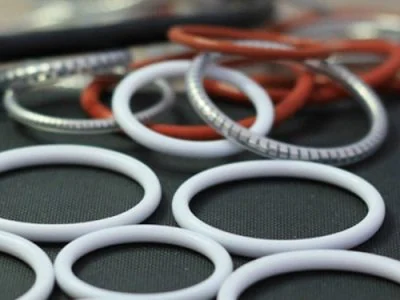
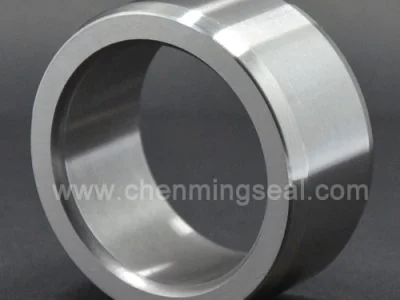
Four material systems
Our material systems cover engineering plastic compounds, high-performance elastomers, springs and metal structural materials. Specific grades and formulations are selected according to media concentration, temperature cycles, cleaning method, motion type and service-life requirements.
PTFE compounds
Filled and modified systems with carbon fiber, graphite, glass fiber, MoS2, PI, POB and other additives.
Used for low friction, corrosion resistance, vacuum, dry friction, limited lubrication, high-speed rotation and clean applications.
Engineering plastic compounds
High-performance engineering plastics such as UPE, PEEK, PPS and PI, plus reinforced and wear-resistant modified materials.
Used for piston rings, guide rings, wear rings, scroll pump sealing strips and precision support components.
High-performance elastomers and encapsulated seals
FKM, FFKM, EPDM, VMQ, and FEP or PTFE encapsulated O-rings.
Media and temperature resistance vary by formulation, so selection depends on chemical media, concentration, temperature and compression state.
Spring and metal structural materials
Metal materials such as 304, 316L, Elgiloy, Inconel and Hastelloy.
Used for elastic elements, metal cases, wear sleeves and structural support, balancing temperature, corrosion, recovery and long-term load.
Material testing and performance validation
Testing items are configured according to material type and project risk. For polymer composition, thermal properties or special analysis, external laboratory results may be used for evaluation.
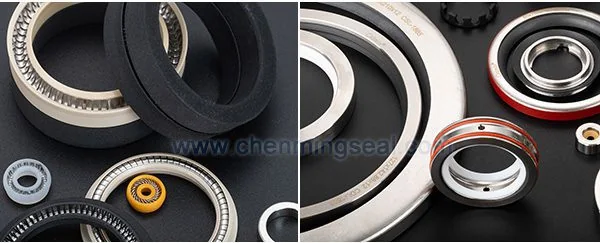
Seal structure selection and manufacturing capability
After material selection, the seal structure must be chosen according to motion type, shaft runout, pressure, speed, installation space and power-consumption requirements.
Spring-compensated structures
Used to compensate shaft runout, eccentricity or wear, maintaining sealing contact through continuous loading.
Reciprocating seal structures
Lip and support structures are selected by rod or bore use, stroke, frequency, pressure direction and clearance.
High-speed low-torque structures
Thin, low-friction and low-heat structures reduce starting torque, temperature rise and operating power consumption.
High-pressure anti-extrusion structures
Improves section stability and support while controlling extrusion risk with clearance, pressure direction and backup rings.
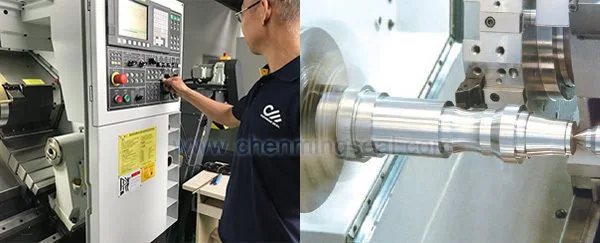
From sample validation to batch production
- PTFE compound molding, sintering and precision machining
- Machining of engineering plastic seals, piston rings, guide rings and wear parts
- Assembly of metal cases, springs, sleeves and sealing components
- Batch production and records according to approved drawings and inspection standards
Four-level quality control
Inspection covers not only dimensions, but also material condition, appearance, key properties, sealing performance and batch records.
Incoming inspection
Confirms material grade, batch, appearance, basic properties and required composition information.
In-process inspection
Controls critical dimensions and properties, and checks machining, sintering, assembly and process status.
Final inspection
Checks appearance, dimensions, fit condition and related sealing performance according to product requirements.
Batch traceability
Retains material, production and inspection records to support repeat orders, abnormal analysis and continuous improvement.
Submit equipment conditions and mating-surface data together
Please provide equipment type, media, temperature, pressure, rotational speed or reciprocating frequency, installation dimensions, mating-surface material and roughness, plus photos or drawings of existing parts when available.